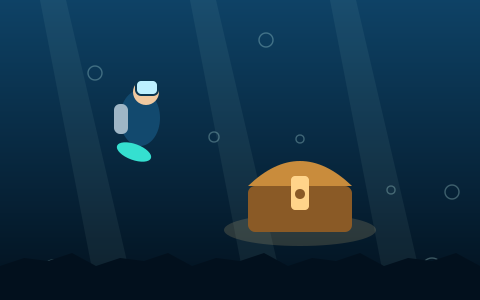
 Diving Games
Ocean Treasure Hunt
Dive for sunken chests, manage your air, and carry the haul back to the surface before it runs out — treasure only counts once it is banked.
An open-water collection game with momentum-based steering. Samples top up the clock, beacons add a bigger chunk of time, and the hazard count climbs steadily for the first minute — so a good run is about staying efficient, not just staying alive.
Tip: turning your device to landscape gives this game a wider playfield.
Objective. Collect as many research samples as you can before the survey clock reaches zero, without losing all three hull segments to drifting hazards.
You control a small crewed submersible in a single open water column with no scrolling — the whole playfield is on screen at all times. Movement is momentum-based: the thrusters accelerate you rather than moving you directly, water drag slows you, and a light negative buoyancy pulls the hull downward whenever you stop steering. Learning to coast into a sample instead of flying at it is the first real skill the game asks for.
Glowing teal samples appear continuously, up to nine at a time. Each one is worth points and adds 1.2 seconds to the clock. Every twelve to twenty seconds a gold beacon appears instead; it lives for nine seconds, is worth 60 points, and returns a full eight seconds of survey time. Beacons are the difference between a two-minute run and a forty-second one.
Hazards drift in from the left and right edges: soft purple jellyfish and tumbling rocks. Contact costs one of three hull segments, gives you 1.6 seconds of invulnerability and shoves the submersible clear so a single bump cannot chain into a second. Lose all three and the dive ends immediately, regardless of how much time is left.
| Input | Action |
|---|---|
| Arrow keys or W A S D | Thrust in eight directions |
| Hold left mouse button | Swim toward the pointer — works anywhere on the stage |
| P or Esc | Pause and resume |
| Space or Enter | Start a run, or restart after a game over |
| Gesture | Action |
|---|---|
| Drag anywhere on the stage | The submersible swims toward your finger |
| On-screen D-pad | Thrust in a fixed direction — shown automatically on touch devices |
| Tap Start / Dive again | Begin or restart a run |
Every game on this site also pauses with P or Esc, and pauses itself if you switch browser tabs mid-run. For a comparison of which input suits which game, see the underwater game controls guide.
Because there is real drag, a short burst followed by a coast puts you on target far more precisely than holding a direction the whole way. Holding overshoots almost every time.
Eight seconds of clock plus 60 points is worth roughly six ordinary samples. If a beacon appears on the far side of the stage, go anyway — you have nine seconds and the stage crosses in about three.
The submersible drifts downward when you stop steering. For anything below you, releasing the controls and steering only sideways costs nothing and keeps your speed under control.
Jellyfish drift slowly and have long trailing tentacles that extend well past the visible bell. Rocks are faster, tumble, and have a tight hitbox. Give jellyfish more room than they look like they need.
After a hit you have 1.6 seconds where nothing can touch you. That is the moment to cut straight through a cluster you would otherwise have to go around.
Samples spawn anywhere in the column. Sitting near the centre halves your average travel distance to the next one, which matters far more than it sounds over a two-minute run.
A run starts with 75 seconds on the clock, but samples add 1.2 seconds each and beacons add eight, so a good player can extend it well past two minutes. The hull, not the clock, is usually what ends a long run.
Yes. Three hazard collisions end the dive immediately, no matter how much survey time is left. The hull read-out in the top bar shows how many segments remain.
Yes. Drag anywhere on the stage and the submersible swims toward your finger, which is the control scheme most players end up preferring even on desktop. An on-screen D-pad also appears on touch devices.
Your best score and best sample count are stored in your browser's local storage. They are not sent anywhere, and they will not follow you to another device or survive clearing your browsing data.
The game is arcade fiction — real jellyfish do not chase submersibles, and the damage model exists to create tension, not to model anything. Sting severity in real life varies enormously by species and most are harmless to humans; see the fact-checking policy for how this site handles real-world marine claims.
Diving Games
Dive for sunken chests, manage your air, and carry the haul back to the surface before it runs out — treasure only counts once it is banked.
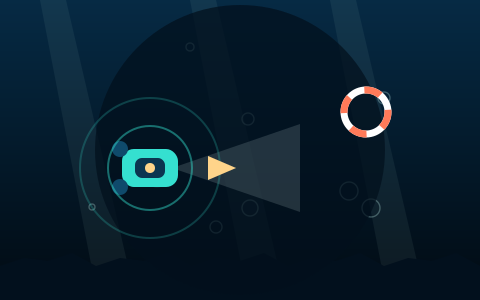 Underwater Adventure Games
Follow the sonar through dark water to find each rescue marker before the clock runs out. The faster you find it, the more it is worth.
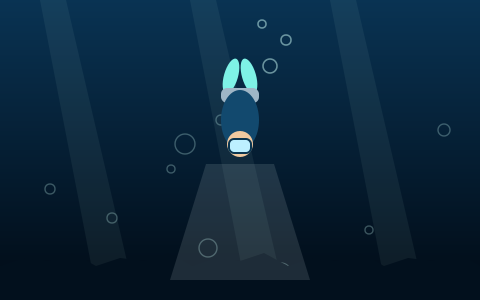 Diving Games
An endless descent. Steer past kelp and urchins, catch air pockets to keep breathing, and see how deep you can get.
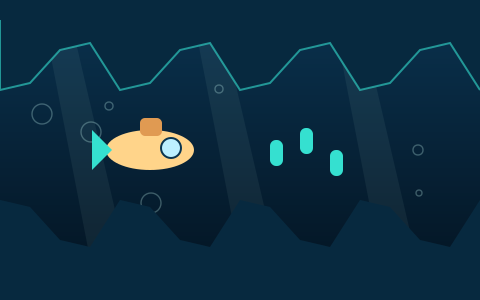 Submarine Games
Thread a submarine through a winding canyon that narrows as you go, collecting energy cells and pushing your distance record.
 Underwater Challenge Games
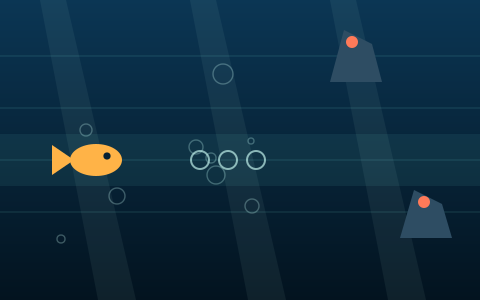
Four current lanes, rock spires in some and bubble strings in others. Switch lanes, keep the combo alive, keep going.
 Ocean & Marine Games
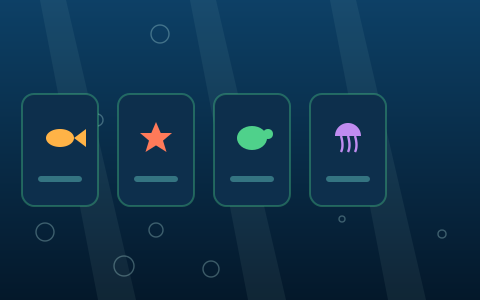
Match pairs of reef creatures against a shared clock across boards that grow from eight cards to twenty-four.
 Underwater Challenge Games
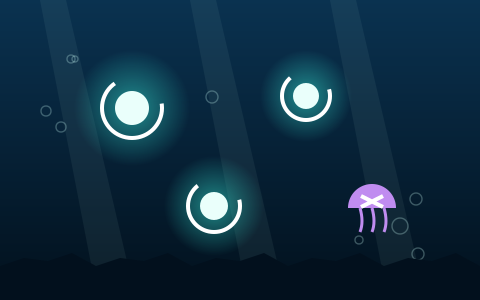
Tap the glowing plankton before they fade, leave the jellyfish alone, and watch your accuracy as closely as your score.